
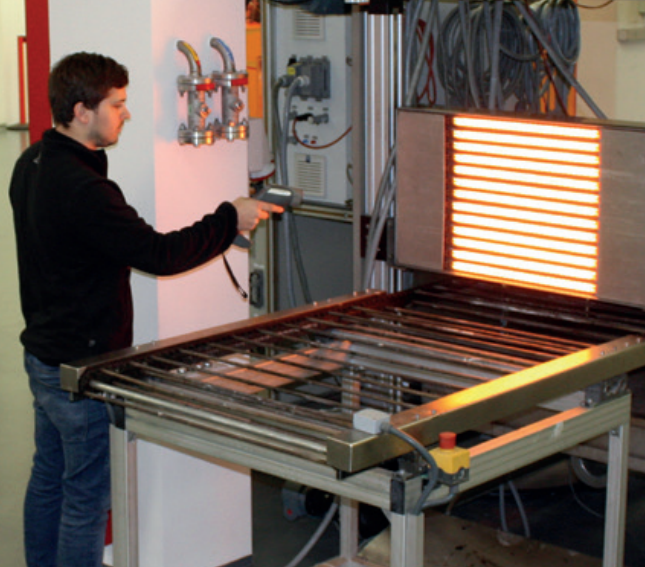
IR Heating vs. Forced Air: Which one actually works for your fab?
If you’re still using hot air circulation for semiconductor deep processing, you’re probably spending way too much time just waiting. Think about it. With forced air, you’re basically trying to heat up the entire room just to get a tiny wafer to the right temperature. It’s slow. It’s clunky. There’s this annoying lag where you’re just sitting there, hoping the heat catches up. IR heating is a different beast. It doesn’t bother with the air at all. It just shoots energy straight at the substrate. It’s fast. Really fast. And that changes everything for your workflow. Instead of waiting minutes for things to warm up—and then dealing with the headache of “thermal overshoot” where the temperature swings too high—IR hits the mark in seconds. When you have that kind of control, you stop worrying about dopant diffusion or the wafer warping. You just get the job done. But you can’t just throw a high-power lamp into a fab and call it a day. You’ll ruin the filament in no time. That’s where the quartz glass shield comes in. We use high-purity quartz because it’s basically invisible to short-wave IR radiation. The heat zips right through, but the lamp stays safe and tucked away from the mess of the process atmosphere. Here’s the catch: those shields take a beating. They go from cold to screaming hot in a heartbeat. If you use the wrong grade of quartz—something that doesn’t handle thermal expansion well—it’ll just crack. Simple as that. Now, I’m not saying IR is a magic wand. It has its quirks. Because radiation is directional, you have to be obsessive about where you put the lamps. If you’re off by even a few millimeters, you’ll end up with hot spots across your wafer, and that’s a nightmare to fix. You’ve got to get the reflector geometry and the shield distance exactly right to keep things uniform. Plus, you’ll need a cooling system that can actually handle that localized heat, otherwise, your housing is going to warp. It takes a bit more planning upfront, but the speed you get in return? That’s the real win.