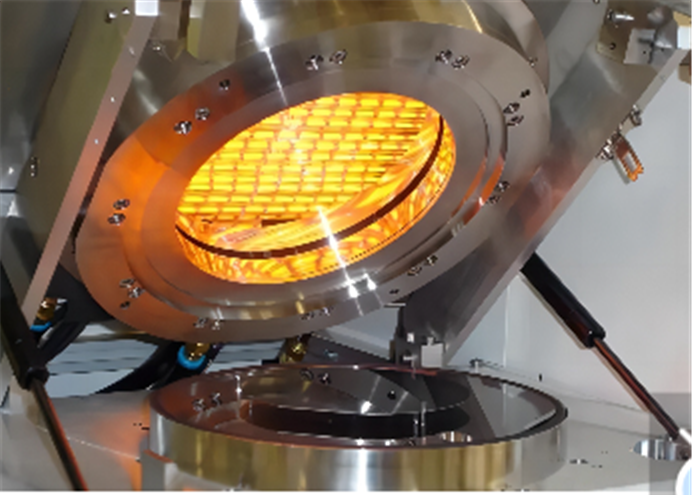
On the fab floor, a 2°C drift during the photoresist bake is enough to shift critical dimensions and scrap the lot. You don’t need a heat source that “has an opinion.” You need one that holds temperature. The quartz halogen bulb we run gives you repeatable thermal control in the places that matter—where the wafer, the photoresist, and the yield all hang in the balance. What matters, technically We run a quartz envelope with a halogen fill, so you get rapid, stable output in short- and medium-wave profiles. That translates to fast thermal response and tight uniformity across the wafer plane—exactly what you need when the thermal budget is tight and the soft bake/hard bake window is narrow. The output stays stable over long runs; we’ve got units that have seen 5,000+ hours with less than 5% intensity drop. The footprint is matched to coat/bake tracks and aligners, and the bases/terminals are standardized so it drops into existing tooling without a fight. Why this works in lithography Photoresist is picky—temperature has to be consistent to hit the right viscosity, adhesion, and line-edge roughness. With this bulb, the setpoint holds within tight tolerance, so within-batch variation drops and critical dimension control stays steady. It’s compatible with Cleanroom Class 1–100 and generates essentially zero particles, so you’re not fighting contamination. Reliability means fewer unplanned stops and fewer spares on the shelf, and the efficient radiant profile keeps energy draw down without making you sacrifice precision. The practical details Installation is straightforward, but alignment is where people get burned. Match the bulb to the reflector and keep it aligned to the substrate plane—misalignment will eat your uniformity. Before you run, verify your tool’s voltage, connector type, and cooling airflow. These bulbs run hot, and you need adequate convection to keep everything stable. Schedule replacements into your PM windows, and keep spare reflectors on hand so optical efficiency doesn’t drift between changes.