

Cutting Carbon in Wafer Processing (Without Losing Your Mind)
Every semiconductor fab is feeling the heat right now to hit those net-zero targets. But when you actually look at where the energy is disappearing, a huge chunk of it is just wasted heat during wafer heating and curing. The old way—big convection ovens—is basically like trying to heat a single pea by warming up the entire kitchen. It’s a massive energy bleed. We’ve found a better way using precision IR sensors and heating systems that actually target the wafer, not the room.
Stop Heating the Walls
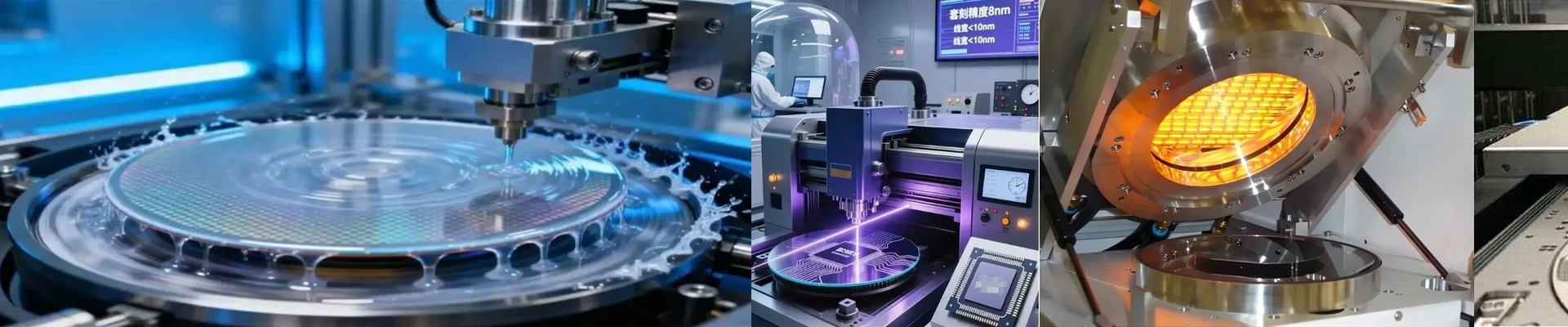
Here’s the problem: if your heating is uneven, you’re scrapping parts. That’s a waste of time and money. We use short-wave IR lamps paired with high-speed pyrometers to create a loop that actually talks to itself. Instead of blasting everything, we target the specific wavelengths that silicon actually absorbs. The result? You stop wasting power heating the chamber walls. You get a faster ramp-up, you pull fewer kilowatt-hours per wafer, and your energy bill drops. It’s just common sense.
Speed and Control
We’ve spec’d these sensors to react in milliseconds. If a hotspot pops up on the wafer surface, the system throttles the IR output instantly. It’s a far cry from those old resistive heaters that always “overshoot” the temperature and leave you praying you didn’t ruin the batch. Plus, we wrap the elements in quartz. It keeps the junk off the heating surface and keeps the whole process clean.
The Catch: Power and Cooling
Now, there is a trade-off. High-density IR arrays move heat fast, but they also dump a lot of radiant energy into the tool frame. You can’t just slide these into an old chassis and call it a day. If your cooling manifolds aren’t built to handle that extra ambient load around the lamp housing, you’re going to fry your control electronics. You’ve got to get the cooling right first.
What This Actually Means for the Floor
When you switch to precision IR, the physical footprint of your heating stage shrinks. You move away from those massive, sluggish chambers and move toward compact arrays that are basically “instant-on.” It makes the “Green Factory” thing feel less like a corporate slogan and more like a reality. You’re lowering the baseline energy needed just to keep things running, which is the fastest way to drop the CO2 cost of every single chip you make.