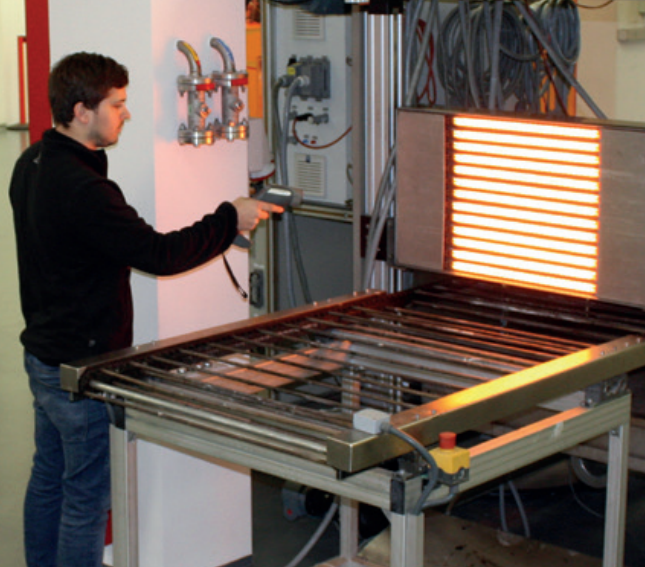
On the lithography floor, a half-degree drift during the photoresist bake isn’t some minor blip. It shows up as a yield hit at electrical test and a particle spike you end up chasing through rework. Wafer IR heating has to do more than just hit a number—it has to deliver stable, repeatable heat across the entire wafer, without adding contamination. What matters under the hood We built the wafer IR system around short-wave infrared halogen emitters in a quartz-enhanced module, tuned for fast response and tight thermal control. Across a 300 mm wafer, we hold temperature uniformity within ±0.1°C, and run-to-run repeatability stays within a few millidegrees. The chamber is cleanroom-compatible from Class 1 to Class 100, using low-outgassing materials and a particle-controlled airflow path that keeps counts down. Zero particle generation isn’t a tagline—it comes down to surface finish, sealing choices, and an exhaust strategy that keeps photoresist byproducts from re-depositing. Here is the thing: in photoresist processing, the soft bake sets solvent removal and film stress, and the hard bake gets the image ready for etch. When the IR hits the target fast and holds steady, you can compress cycle time without losing profile control. Tighter thermal budget means fewer rework lots, more consistent CDs, and less energy wasted on overrun and cooldown. The system runs 24/7 with predictable maintenance intervals, so unplanned downtime drops and the line schedule stays stable. High-precision IR heating is sensitive to emissivity differences across films and substrates. Plan on tuning lamp power zones and dwell profiles for each substrate, and confirm alignment with your coater/track interfaces. Initial qualification takes time, sure. But once the recipe is locked, the process stays in spec with routine checks of lamp output and temperature calibration.