

Stop Waiting on Your Oven: How Gold-Coated IR Lamps Speed Up Semiconductor Work
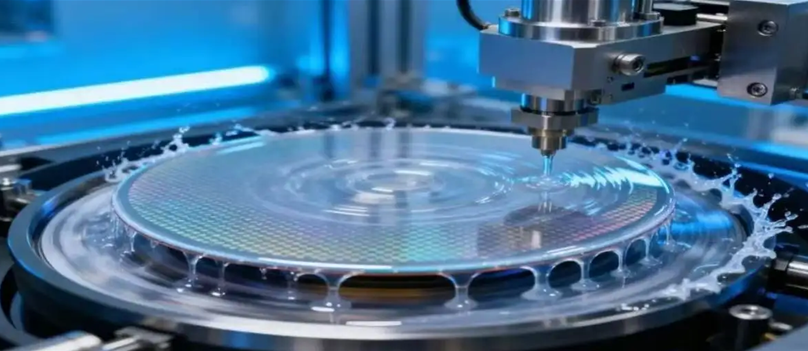
If you’ve spent any time in semiconductor processing, you know the frustration of waiting. Relying on hot air circulation is a slog. Air is just bad at moving heat. You end up sitting there, watching the clock, waiting for your substrate to finally hit the right temperature. It’s a bottleneck that kills your momentum. We found a better way. Instead of heating the air and hoping it reaches the part, we use twin-tube gold-coated infrared (IR) lamps to hit the material directly. The secret is in the gold. A basic quartz lamp wastes a ton of energy—it just glows in every direction. But when we coat the inside of the quartz with gold, that IR radiation bounces right back toward your workpiece. Instead of a soft glow, you get a concentrated beam of heat exactly where you need it. Then there’s the twin-tube setup. By doubling up the filaments in a small space, we can push way more heat into the part without needing a massive heating zone. It’s compact, but it packs a punch. Let’s talk about the clock. Hot air is slow. You have to heat the air, then the chamber, and then the part. It’s a chain reaction that takes forever. IR radiation moves at the speed of light. It hits the target instantly. Think about your production line. If you can shrink a 10-minute heating cycle down to 2 minutes, you just clawed back 8 minutes of uptime for every single part. That adds up fast. A few things to watch out for. Now, these aren’t “plug and play” in the sense that you can just toss them into an old convection oven. They put out an incredible amount of energy in a tiny area. You’ll need to make sure your cooling systems are dialed in, specifically at the lamp ends, or you’ll burn through your seals. Your power supply needs to be rock solid, too. If the voltage jumps around, those high-density filaments will fry. And for heaven’s sake, use high-temp leads. If you use standard wiring, the insulation will melt before you even realize what happened.