Why we use Infrared Curing to stay lead-free
Making biosensors is a bit of a balancing act. You need enough heat to cure your adhesives and layers, but if you overdo it, you’ll fry the sensitive substrates. That’s why we stick with infrared (IR) lamps. Instead of blowing hot air around, IR uses radiation to get the job done. It means we can ditch the forced-air systems and those nasty chemical solvents that usually clash with “green” or lead-free industry rules.
How it actually works
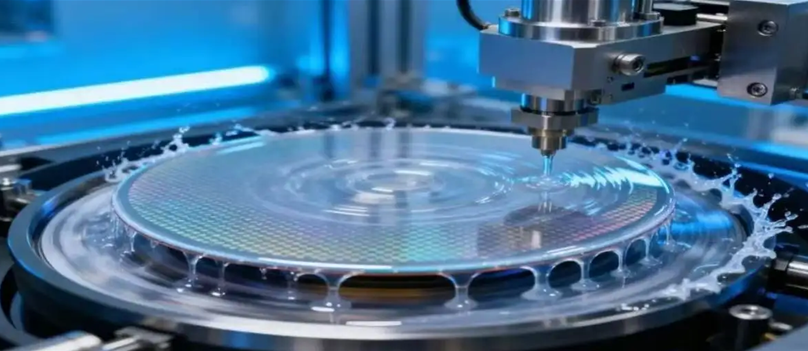
Think about a standard convection oven. It heats the air, and then the air heats your part. It’s slow. It’s clunky. IR is different. It sends photons straight into the material. In our biosensor lines, we target specific absorption bands to get that polymerization moving. The best part? You aren’t wasting energy heating up the entire metal chassis of a giant machine. You’re just heating the wafer.
The tricky parts
To get the speed we need, we usually go with short-wave IR. It keeps the equipment small and the cycle times fast. It’s basically an “instant-on” heat source. But there’s a catch: thermal overshoot. If your conveyor speed is off by even a little, the surface temperature can spike. Before you know it, you’ve warped the substrate or burnt through the organic layers of the sensor. To stop that from happening, you can’t just “set it and forget it.” You need closed-loop PID controllers and pyrometers to keep everything steady.
Keeping it clean
Old-school curing usually relies on lead-based fluxes or solvents heavy with VOCs just to get the melting points down. IR changes the math. Because we can put concentrated energy exactly where the bond happens, we can use higher-temperature, lead-free materials without breaking a sweat. Plus, your power bill drops because you aren’t keeping a massive oven idling at 200°C all day. It’s just a cleaner way to run a semiconductor line. No fumes. No lead. Just photons.