
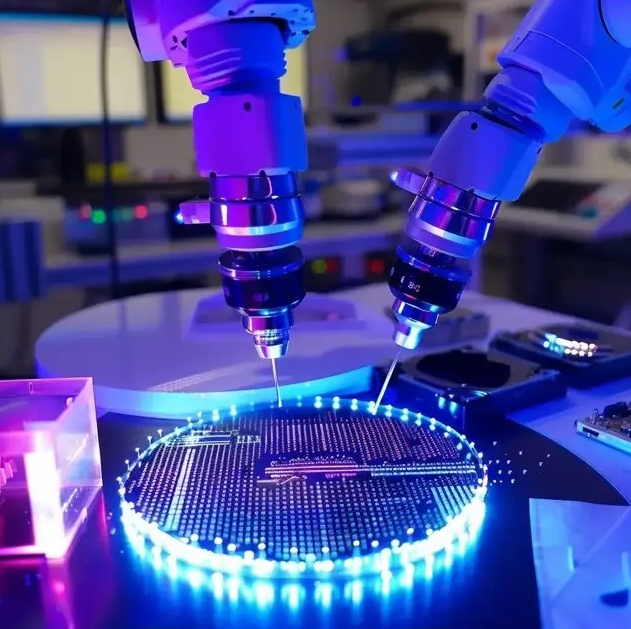
Why we’re moving away from hot air in semiconductor processing
If you’ve ever spent time upgrading clean room gear, you know the headache of thermal ramp-up. It’s the part of the process that always feels like it’s dragging. Most old-school fabs still lean on hot air circulation. The problem is that it’s a two-step dance: you heat the air, and then you hope that heat actually makes its way into the substrate. It’s slow. It’s wasteful. And honestly, it’s a bit frustrating when you’re trying to hit a deadline. That’s why a lot of us are switching to Short-Wave Infrared (SWIR) heating. It just cuts out the middleman. Stop heating the air Think about it this way. Hot air relies on convection, which is basically just waiting around for the atmosphere to get warm enough to soak into the wafer. IR doesn’t care about the air. It uses electromagnetic radiation to send energy straight into the material. You aren’t wasting time warming up the room; you’re warming up the part. The lag between flipping the switch and hitting your process temperature basically disappears. More wafers, less clutter When you move to IR, your heating zone can get a lot smaller. Since the heat is so concentrated, you don’t need those massive, clunky convection chambers just to keep things steady. This frees up a surprising amount of space on your fab floor. But the real win is the speed. Imagine taking a 10-minute bake cycle and shrinking it down to 2 minutes. You get way more wafers through the door every hour without having to buy and install a bunch of new machines. The reality check Now, IR isn’t a magic wand. It has its quirks. Because the heat is so directional, you can run into “shadowing.” If your part has a weird shape or deep pockets, the IR rays might not hit every spot. In those cases, you’ll still want a bit of convection to fill in the gaps. And a word of caution: those high-wattage lamps get incredibly hot at the terminals. If you’re running 24/7, don’t skimp on your wiring or cooling fans. Otherwise, you’re looking at burnt-out connectors and unplanned downtime.