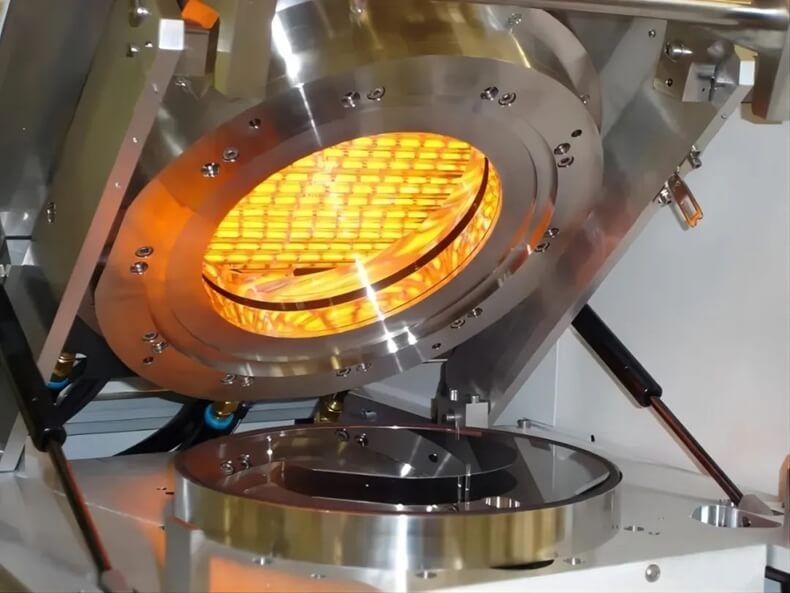
On the fab floor, polyimide curing isn’t just another thermal step. It’s a dimensional promise. Push or pull the temperature by even a few degrees across the wafer, and you’ll shift stress, warp the film, and watch yield drift out of spec. We built our approach around that reality: hold temperature where it counts, without giving up cleanliness or uptime. What matters, technically We pair a short-wave infrared emitter with a quartz-stabilized thermal field to hit wafer-level uniformity of ±0.1°C during the polyimide cure. Cycle-to-cycle repeatability comes in at ±0.2°C, so the numbers that matter—residual solvent, CTE—stay locked in. The chamber is cleanroom-ready, Class 1–100 compatible, with a particle-controlled path that keeps generation below 0.1 particle/cm² at 0.1 μm. The system sips power thanks to efficient conversion and fast thermal response, cutting idle draw without adding process time. Why this matters in the flow Polyimide curing sits right after photoresist processing and before lithography stacks. Thermal history here directly hits linewidth control and adhesion. With tight uniformity and repeatability, you see fewer rework lots and qualification windows that behave themselves. The payoff is film properties that land the same way across the wafer—less scrap, schedules you can trust. Reliability is baked in: components are rated for 24/7, and the thermal module holds output after 5,000+ hours with under 5% intensity drift. What you need to keep in mind Integration is straightforward on standard tracks, but the short-wave profile needs to be matched to the substrate stack and reflectivity. Gold-plated fixtures or highly reflective chucks can create localized overshoot unless the recipe is tuned. We supply the emitter, controller, and interface kit, but run a short qualification to lock in setpoints for your polyimide formulation and wafer size.
ในพื้นที่โรงงาน กระบวนการบ่มโพลิอิไมด์ไม่ใช่แค่ขั้นตอนทางความร้อนธรรมดา แต่มันเป็นข้อผูกมัดด้านมิติ หากอุณหภูมิเปลี่ยนแปลงแม้เพียงไม่กี่องศาบนเวเฟอร์ จะส่งผลให้เกิดความเค้น เปลี่ยนรูปฟิล์ม และทำให้ผลผลิตออกนอกค่ามาตรฐาน เราจึงออกแบบวิธีการโดยมุ่งเน้นให้ควบคุมอุณหภูมิได้อย่างแม่นยำ ณ จุดสำคัญ โดยไม่ลดทอนความสะอาดหรือเวลาใช้งาน
สิ่งที่มีความสำคัญเชิงเทคนิค เราจับคู่การปล่อยรังสีอินฟราเรดคลื่นสั้นกับสนามความร้อนที่เสถียรโดยควอตซ์ เพื่อให้ได้ความสม่ำเสมอของอุณหภูมิระดับเวเฟอร์ที่ ±0.1°C ระหว่างการบ่มโพลิอิไมด์ ความสามารถในการทำซ้ำระหว่างรอบอยู่ที่ ±0.2°C ดังนั้นตัวแปรที่สำคัญ เช่น ตัวทำละลายตกค้างและค่า CTE จะยังคงอยู่ในเกณฑ์ที่ล็อกไว้ ห้องบ่มถูกออกแบบสำหรับห้องสะอาด รองรับ Class 1–100 พร้อมเส้นทางควบคุมฝุ่นที่จำกัดการเกิดอนุภาคต่ำกว่า 0.1 อนุภาค/ซม² ที่ขนาด 0.1 μm ระบบใช้พลังงานน้อยเพราะการแปลงพลังงานมีประสิทธิภาพและตอบสนองความร้อนได้รวดเร็ว ลดการใช้พลังงานในช่วงเวลาว่างโดยไม่เพิ่มเวลากระบวนการ
เหตุใดจึงสำคัญในกระบวนการผลิต การบ่มโพลิอิไมด์จะเกิดขึ้นหลังจากขั้นตอนการเคลือบโฟโตรีซิสต์และก่อนการเรียงชั้นลิโธกราฟี ประวัติอุณหภูมิในขั้นตอนนี้ส่งผลโดยตรงต่อการควบคุมความกว้างเส้นและการยึดติด ด้วยความสม่ำเสมอและความสามารถในการทำซ้ำที่เข้มงวด จะช่วยลดจำนวนล็อตที่ต้องทำซ้ำและทำให้ช่วงเวลาการทดสอบผ่านเกณฑ์มีความเสถียร ผลลัพธ์คือคุณสมบัติของฟิล์มที่เหมือนกันทั่วเวเฟอร์ ลดของเสียและสามารถวางแผนเวลาได้อย่างน่าเชื่อถือ ความน่าเชื่อถือถูกกำหนดไว้ในระบบ: อุปกรณ์แต่ละชิ้นถูกออกแบบให้ทำงานต่อเนื่อง 24/7 และโมดูลความร้อนยังคงให้กำลังที่เสถียรหลังการใช้งานมากกว่า 5,000 ชั่วโมงโดยมีการเปลี่ยนแปลงความเข้มต่ำกว่า 5%
ข้อควรระวังในการติดตั้ง การผสานรวมเข้ากับสายการผลิตมาตรฐานทำได้ตรงไปตรงมา แต่โปรไฟล์ความยาวคลื่นสั้นต้องปรับให้เหมาะสมกับชั้นวัสดุรองรับและการสะท้อนของพื้นผิว อุปกรณ์ชุบทองหรือชัคที่สะท้อนสูงอาจทำให้เกิดการเพิ่มอุณหภูมิบริเวณเฉพาะจุดได้หากไม่มีการปรับสูตรการทำงาน เราจัดหาเครื่องปล่อยรังสี ตัวควบคุม และชุดอินเตอร์เฟสให้ พร้อมกับการทดสอบสั้น ๆ เพื่อยืนยันจุดตั้งค่าสำหรับสูตรโพลิอิไมด์และขนาดเวเฟอร์ของคุณ